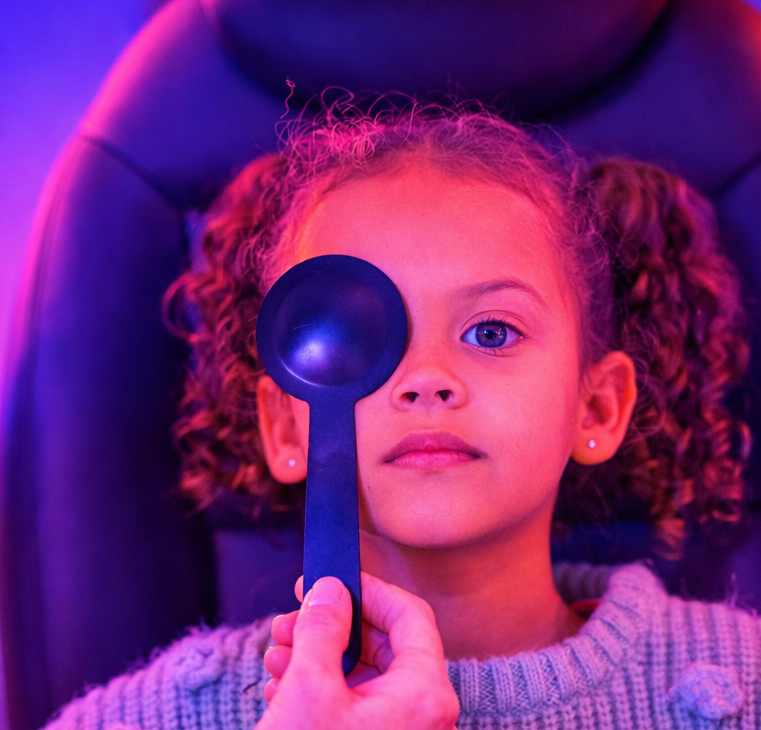
Paediatric Vision Care
What are the signs that a child may need an eye test?
A child may need an eye test if they squint, sit close to screens, hold books near their face, frequently rub their eyes or struggle to concentrate while reading. Other signs include headaches, losing their place, avoiding close work or falling behind at school. A comprehensive eye examination can identify whether a vision problem is contributing.
From learning in class to joining in games, children rely on their vision every day to make sense of the world. Up to 80% of what they learn is processed visually, meaning even minor vision problems can impact school performance, sports, and confidence. At Kaleidovision, our optometrist in Claremont offers gentle, child-friendly vision care that gives your little one the best start in life.
When should your child have an eye test?
- Babies can be checked within the first year
- Children should ideally have their first check-up by age 3
- Pre-schoolers should have a full test before starting school
- School-aged children should be tested every one to two years
Children who show signs of developmental delays, struggle at school or with sports may need an eye test sooner.
Book an Appointment
Contact Us
Address
120 Belvedere Rd, Claremont, Cape Town, 7708
Phone/ Whatsapp
021 045 0763
Business hours
Mon – Thurs: 8:30am – 17:30
Friday: 8:30am – 17:00
Saturday: 8:30am – 13:00
Friday: 8:30am – 17:00
Saturday: 8:30am – 13:00
What services do we provide?
Our paediatric vision care includes:
- Comprehensive eye exams tailored to different age groups
- Early detection of conditions like lazy eye (amblyopia) or squints (strabismus)
- Guidance on myopia control for children at risk of developing short-sightedness
- Advice on protective eyewear for sports and play
- The latest vision development and rehabilitation for children with developmental delays
- Early eye health challenge detection to promote treatment outcomes
Signs your child may have a vision problem
Parents should look out for:
- Squinting or sitting very close to the TV
- Holding books too close to the face
- Covering one eye when reading
- Frequent eye rubbing
- Difficulty concentrating
- Clumsiness or knocking into things often
If you notice any of these, book a consultation with our paediatric optometrist in Claremont.
Why parents choose Kaleidovision in Claremont
We recognise that children may feel anxious about eye exams. Our optometrist dedicates time to make sure each child feels comfortable, explaining the process in a fun and reassuring manner. Parents are always involved, keeping you informed and confident about the results.
Book your child’s eye test today
Support your child’s learning and development with paediatric eye care from Kaleidovision, a trusted optometrist in Claremont.
Frequently Asked Questions
1. Why is my child struggling to read?
A child may struggle to read for several reasons, including language, learning, attention or vision difficulties. Signs that vision may be contributing include losing their place, skipping words, reading slowly, experiencing headaches or avoiding close work. A comprehensive eye examination can assess whether the eyes are focusing, tracking and working together efficiently.
2. What are the signs that my child needs glasses?
Possible signs include squinting, sitting close to screens, holding books near the face, rubbing the eyes frequently or struggling to see the board at school. Children may also complain of blurred vision or headaches. Some children do not realise that their vision is unclear, so routine eye examinations remain important.
3. Can vision problems be mistaken for ADHD?
Certain vision difficulties may cause poor concentration, restlessness, reading avoidance or difficulty completing close tasks. These behaviours can resemble attention difficulties, but vision problems and ADHD are separate conditions. An optometrist can assess visual function, while ADHD must be evaluated by an appropriately qualified healthcare professional.
4. At what age should a child have their first eye test?
A child’s eyes can be assessed during infancy, even before they can read or speak. Children should ideally have a comprehensive eye examination by around three years old and again before starting school. An earlier assessment may be recommended when parents notice unusual visual behaviour or developmental concerns.
5. How often should children have their eyes tested?
School-aged children should generally have an eye examination every one to two years. More frequent testing may be recommended for children who wear glasses, have an existing eye condition, experience learning difficulties or have a family history of vision problems.
6. What happens during a child’s eye test?
A paediatric eye examination may assess eyesight, eye health, focusing ability, eye tracking and how well the eyes work together. Tests are adapted to the child’s age and communication level. Children do not need to know their letters or be able to describe their vision for the optometrist to complete an appropriate assessment.